

 Feed back
 Privacy Policy
Unlike Western astrology, which uses the tropical zodiac aligned with seasons, Vedic astrology (also called Jyotish) uses the fixed sidereal zodiac — calibrated to actual star positions. This makes transits like Jupiter in Taurus or Saturn in Pisces far more accurate for timing life events. For example, Jupiter’s 12-month transit through Taurus (May 2026–May 2027) activates your 2nd house of income and values — meaning salary negotiations, budgeting habits, or even reevaluating what “enough” means become central themes. Saturn in Pisces (March–December 2026, then retrograde into Aquarius before returning) emphasizes inner discipline over external validation — think meditation consistency, therapy follow-through, or setting empathetic but firm boundaries with family. This precision is why professionals, entrepreneurs, and students across the US, UK, Canada, and India’s global diaspora rely on vedic astrology 2026 predictions to schedule launches, avoid burnout windows, and align decisions with natural energetic rhythms — not guesswork.
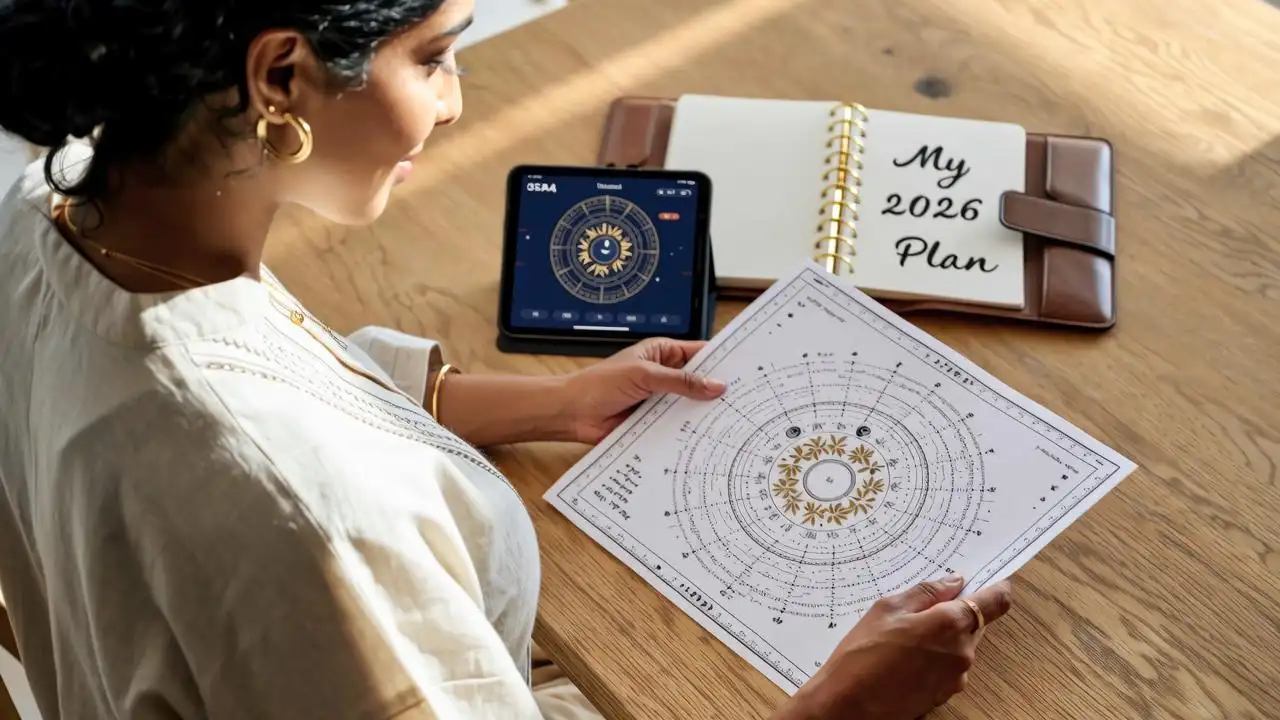
You don’t need a guru, a credit card, or even an account to begin. Here’s your exact 3-step process:
This is your kundali chart online free — no hidden fees, no email capture. We recommend these three trusted tools, all verified for accuracy and mobile-friendly:
Once generated, verify accuracy in under 60 seconds: check your Lagna (Ascendant sign) and Moon sign. If your Lagna is Leo, you likely project warmth, leadership, and visibility — does that resonate? If your Moon is in Cancer, emotional security and nurturing are core needs. Mismatches suggest incorrect birth time — adjust by ±15 minutes and regenerate. This quick sanity test is your first step into jyotish astrology for beginners.
Your vedic astrology 2026 predictions aren’t written in fate — they’re a weather report for your inner landscape. Focus on just three houses to start:
Real-life example: A marketing manager with Taurus Lagna saw her 2nd house activated in early 2026. She renegotiated her contract — not for more hours, but for equity in a startup project. That’s vedic astrology calculator insight applied: matching transit energy (Jupiter in Taurus = value-based growth) to action.
Red-flag vs. green-flag decoding: If your chart shows “Saturn aspecting Moon,” it doesn’t mean “you’ll be depressed.” It means your emotional resilience is being stress-tested — especially during full moons in April, August, and November 2026. The green-flag response? Schedule 10 minutes of breathwork before bed on those dates. That’s Jyotish astrology for beginners made practical.
You don’t need to memorize 27 Nakshatras or calculate Vimshottari Dasha manually. Use your vedic astrology calculator to do the math — and focus on meaning instead. Master these three pillars:
Why is your Moon sign more important than your Sun sign in Vedic astrology? Because the Moon governs emotions, habits, and subconscious reactions — the engine behind daily choices. Your Sun sign is your purpose; your Moon sign is your fuel. Find yours instantly: in your generated kundali, look for “Chandra Rashi” or “Moon Sign.”
Here’s your cheat sheet — no jargon, just utility:
Now turn insight into action. Use this month-by-month checklist (aligned with NASA-verified transits):
Download your free Printable 2026 Vedic Calendar PDF — pre-marked with all key transits, Nakshatra shifts, and one-sentence guidance per month.
Your next step takes 30 seconds: Bookmark your kundali URL (e.g., Astrosage or Drik Panchang link), set a recurring 5-minute calendar reminder for the 1st of each month, and track just one metric — e.g., “% days I spoke up in meetings,” “savings rate,” or “conflict resolution success.” Consistency compounds. By December, you’ll see measurable progress — not just predictions.
Disclaimer: The content related to Astrology 2026 in this article is for reference only and does not constitute any professional advice in any related field. Readers should carefully assess their own circumstances and consult qualified professionals when necessary. The author and publisher of this article are not liable for any consequences arising from any actions taken based on the content of this article.
Amy Sharma
|
2026.02.10


