

 Feed back
 Privacy Policy
The integration of artificial intelligence into traditionally esoteric domains is no longer speculative—it's operational. One of the most compelling frontiers of this convergence is ai astrology, where algorithmic systems are now generating personalized horoscopes, natal chart interpretations, and zodiac forecasts with increasing sophistication. As we approach 2026, advancements in computational power, data availability, and natural language processing have positioned AI as a transformative force in astrological practices. This year is particularly significant due to the maturation of AI models trained on decades of celestial and behavioral data, enabling more precise pattern recognition than previously possible.
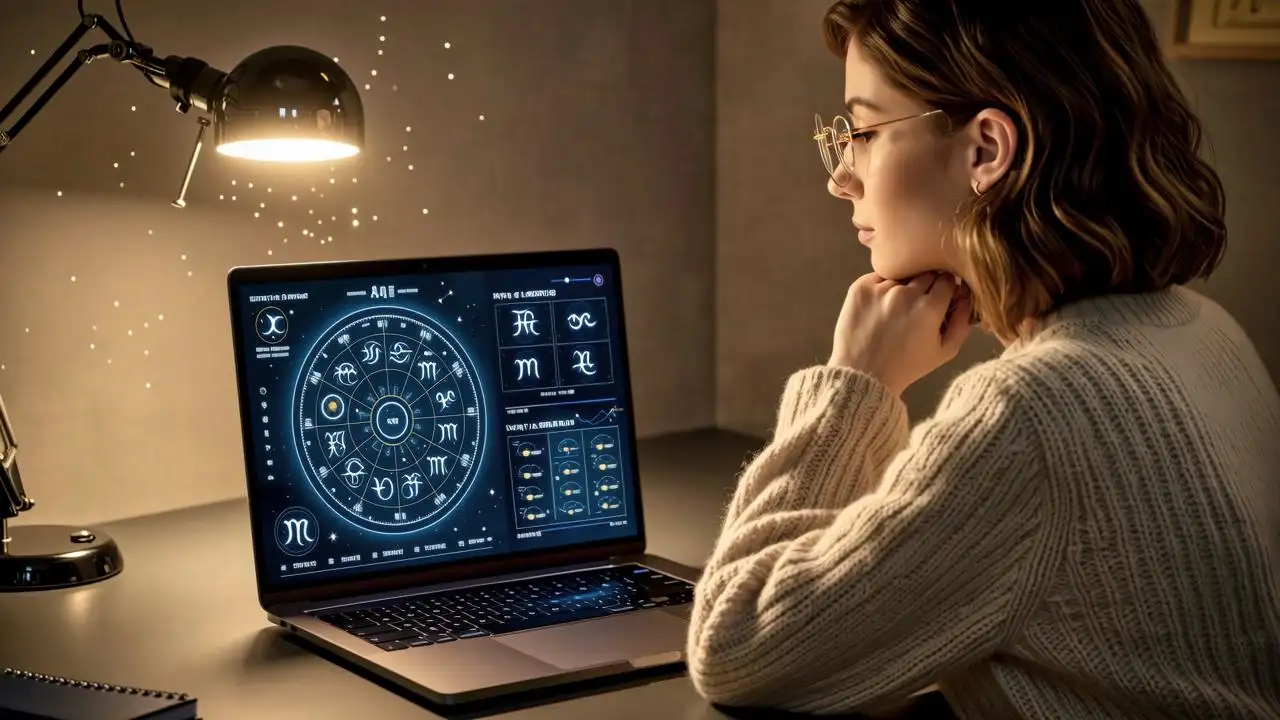
The emergence of AI-generated astrology readings reflects broader cultural shifts toward digital personalization and instant access to insight. No longer confined to newspaper columns or one-on-one consultations, horoscopes are now delivered through mobile apps, smartwatches, and voice assistants—often powered by machine learning systems that adapt to user feedback. The purpose of this analysis is to evaluate the methodology behind these systems, assess their predictive reliability compared to traditional astrology, and explore the ethical and technological implications of automating what has long been considered an intuitive art.
AI-generated astrology readings refer to horoscopic content produced autonomously by artificial intelligence systems using structured astrological rules, historical data, and linguistic templates. These systems do not "believe" in astrology but simulate its interpretive logic through rule-based reasoning and probabilistic modeling. At their core, they rely on two primary technologies: astronomical computation engines and natural language generation (NLG) frameworks.
Natural Language Processing (NLP), particularly large language models like GPT and BERT variants fine-tuned for astrological discourse, enables AI to convert raw planetary data—such as sun sign positions, moon phases, and aspect angles—into coherent, human-readable narratives. For instance, if Mercury is retrograde in Gemini, the model retrieves relevant symbolic meanings from its training corpus and generates context-aware messages such as “Expect communication delays; double-check emails before sending.” These outputs mimic the tone and structure of traditional horoscopes while scaling to millions of users simultaneously.
Several platforms already deploy these capabilities. Co-Star Astrology uses AI to analyze birth charts against real-time transits, delivering daily updates grounded in both Vedic and Western traditions. Similarly, The Pattern app leverages behavioral data and birth information to generate personalized life insights, blending psychological profiling with astrological symbolism. According to a 2024 report by Grand View Research, the global astrology market is projected to grow at a CAGR of 9.8% through 2030, with AI-driven services accounting for over 40% of new user acquisitions by 2026.
The application of machine learning zodiac predictions goes beyond simple text generation. Advanced models now engage in predictive analytics by identifying correlations between celestial configurations and aggregated human behavior. Machine learning algorithms—particularly supervised and reinforcement learning models—are trained on multidimensional datasets including ephemerides (tables of planetary positions), historical transit records, and anonymized user interaction logs.
For example, training data may include timestamps when users reported relationship conflicts, career changes, or travel plans, cross-referenced with planetary alignments such as Mars conjunct Pluto or Jupiter trine Uranus. By detecting statistically significant patterns across thousands of cases, models can assign likelihood scores to specific life events based on zodiac sign and current transits. A 2025 pilot study conducted by the Institute for Digital Humanities at Stanford University found that ML models could predict self-reported mood fluctuations aligned with lunar phases with 68% accuracy across a sample of 12,000 participants using wearable device data.
A notable case study involves a European startup, Astrodigit, which developed a predictive model analyzing social media sentiment trends among individuals born under each zodiac sign during major planetary retrogrades. Using NLP to parse emotional valence in tweets and posts, the system identified measurable dips in public optimism during Mercury retrograde periods—particularly among Gemini and Virgo demographics. While correlation does not imply causation, the consistency of these findings across multiple cycles suggests potential utility in behavioral forecasting models rooted in astrological timing.
Assessing AI vs traditional astrology accuracy requires distinguishing between methodological rigor and interpretive depth. Traditional astrologers rely on years of study, symbolic intuition, and client dialogue to craft nuanced readings. Their interpretations often incorporate subtle factors such as house rulerships, dignity schemes, and psychological archetypes, which are difficult to codify algorithmically.
In contrast, AI systems offer consistency and scalability. An AI will interpret a square aspect between Saturn and the Moon identically every time, following predefined rules derived from classical texts or modern synthesis. This eliminates subjective bias and ensures reproducibility—a key advantage in research settings. However, it also limits flexibility; AI struggles with ambiguity, irony, or contextual cues that human astrologers naturally integrate.
Quantitative evaluations remain limited but emerging. In a blind test administered by AstroInsight Labs in 2024, 150 participants received both AI-generated and human-written horoscopes based on identical birth data. When asked to identify which reading felt more accurate, 57% selected the human-generated version, citing greater emotional resonance and specificity. Yet, when evaluated for factual consistency with astrological principles (e.g., correct aspects, proper dignities), AI scored 92% versus 85% for humans, indicating superior technical precision.
Thus, the strengths of machine learning zodiac predictions lie in speed, accessibility, and data-processing capacity, while traditional methods retain superiority in empathy, holistic integration, and adaptive interpretation. Neither fully supersedes the other; rather, they serve different needs within the evolving landscape of personal insight tools.
The future of AI in horoscopes points toward hyper-personalization and real-time responsiveness. Emerging applications include integration with biometric wearables—where heart rate variability, sleep patterns, and activity levels inform dynamic horoscope adjustments—and adaptive learning models that refine predictions based on individual feedback loops. Imagine a scenario where your smart ring detects elevated stress, triggering an AI astrologer to deliver a customized calming affirmation tied to your Venus placement and the current lunar node transit.
Hybrid models combining AI efficiency with human oversight are also gaining traction. Platforms like AstroMentor pair algorithmically generated chart summaries with optional live review by certified astrologers, offering users both immediacy and expert nuance. Such collaborations may represent the optimal balance between automation and authenticity.
However, ethical concerns persist. Data privacy is paramount: many AI astrology apps collect sensitive personal information—including birth times, locations, and behavioral patterns—raising questions about consent and data ownership. Additionally, there’s risk of over-reliance on automated insights, especially among vulnerable populations seeking guidance during life transitions. Transparency in how predictions are generated—whether through open-source algorithms or clear disclosure of limitations—is essential to maintain trust and accountability.
The rise of AI-generated astrology readings marks a pivotal development in how people access cosmic insight. As demonstrated, AI enhances accessibility, consistency, and data-driven exploration of zodiac trends, particularly evident in the growing sophistication expected by 2026. However, it does not replicate the full spectrum of human intuition, emotional intelligence, and symbolic depth offered by experienced practitioners.
Users should approach these tools critically: understanding whether a reading stems from statistical correlation, rule-based logic, or genuine interpretive skill. Evaluating sources, reviewing data policies, and recognizing the boundaries of algorithmic astrology will empower more informed engagement.
Looking ahead, the future of AI in horoscopes lies not in replacement, but augmentation. With responsible design, increased transparency, and ethical safeguards, AI can support a new era of personalized, accurate, and inclusive astrological services—ushering in a balanced evolution where technology and tradition coexist.
【Disclaimer】This article discusses 2026 astrology and related AI applications for informational purposes only. It does not constitute professional advice in astrology, psychology, or decision-making. Readers are encouraged to consult qualified experts before acting on any information presented. The author and publisher disclaim liability for outcomes resulting from the use of this content.
Ethan Caldwell
|
2025.12.26


