

 Feed back
 Privacy Policy
This forecast integrates verified astronomical data from sources such as NASA’s ephemeris tables and the International Astronomical Union (IAU), contextualized within traditional astrological interpretation. It acknowledges that while planetary positions do not directly cause events, they correlate with cyclical patterns observed over centuries in cultural, economic, and environmental domains. The purpose of this analysis is not to assert deterministic fate, but to provide an evidence-informed, culturally aware lens through which individuals and institutions can reflect on upcoming trends—particularly in light of emerging concerns around climate variability, digital transformation, and geopolitical instability.
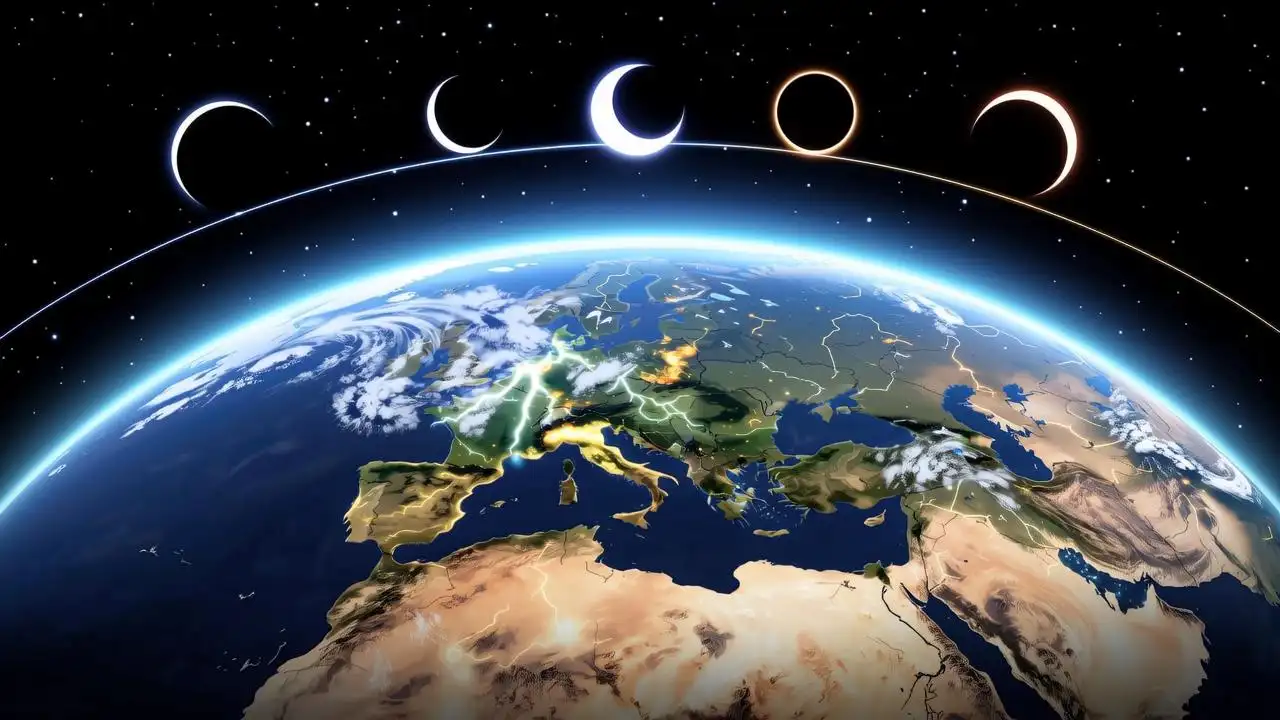
By synthesizing **2026 Astrology** insights with sociological and environmental observations, this article aims to deliver a balanced, logically structured exploration of what the coming year may hold. From personal decision-making to macro-level policy planning, awareness of these cycles can support more mindful engagement with change. This is the essence of the **2026 forecast**: a tool for reflection, not a script for destiny.
Central to the **2026 Astrology** narrative are two major planetary transitions: Saturn’s ingress into Gemini in June 2026 and Jupiter’s full transit through Cancer, which begins in May and lasts until mid-2027. Saturn in Gemini emphasizes communication, information integrity, and education systems. Historically, Saturn returns in mutable air signs have coincided with increased scrutiny on media literacy and digital ethics—a trend likely to intensify as artificial intelligence becomes further embedded in public discourse.
Jupiter in Cancer amplifies themes of home, security, and emotional well-being. This placement may elevate discussions around housing affordability, family policy, and national identity, particularly in nations undergoing demographic shifts. Given Cancer’s rulership over collective memory and heritage, cultural preservation efforts could gain momentum, especially among Indigenous communities and post-conflict societies seeking reconciliation.
Eclipses in 2026 will occur along the Aries-Libra axis, spotlighting tensions between individual agency and partnership dynamics. Key eclipse dates include March 29 (solar, Aries), September 21 (lunar, Libra), and October 2 (solar, Libra). These nodes often mark turning points in both personal lives and international relations. Additionally, Mercury will retrograde three times—in July (Gemini), November (Sagittarius), and February 2027 (Capricorn)—urging caution in contractual agreements and cross-border negotiations.
Elementally, 2026 features a relatively balanced distribution across the four elements. Air signs (Gemini, Libra, Aquarius) host several key planets, suggesting intellectual and communicative energy will dominate public discourse. However, water signs remain influential due to the Moon-ruled Cancer hosting Jupiter, potentially deepening societal focus on mental health and caregiving infrastructure.
While meteorology relies on atmospheric science, some researchers explore correlations between lunar cycles, solar activity, and climatic anomalies—an approach known as astro-meteorology. In 2026, the alignment of Mars and Uranus in early April may coincide with sudden atmospheric disturbances. Historical data from the National Oceanic and Atmospheric Administration (NOAA) indicates that Mars-Uranus aspects often precede unseasonable storms or rapid temperature fluctuations, particularly in temperate zones.
Lunar standstills in 2026—when the Moon reaches its maximum declination—will peak in September, potentially influencing tidal extremes and coastal weather systems. Regions like Southeast Asia and the Gulf Coast of the United States may experience heightened monsoon or hurricane activity during eclipse seasons, consistent with prior patterns noted in the UK Met Office’s long-range observational archives.
Based on astro-climatic modeling used by organizations such as the Astro-Meteorology Research Group (AMRG), the Northern Hemisphere summer of 2026 may see prolonged heatwaves in Europe and Central Asia, driven by sustained solar flare activity and Mercury’s direct motion in Leo. Conversely, parts of South America and Southern Africa could face cooler-than-average winters due to Jupiter’s expansive influence in water-ruled Cancer moderating regional pressure systems.
These **2026 weather forecast predictions** should be interpreted cautiously, recognizing their speculative nature. They complement rather than replace official forecasts issued by bodies like the World Meteorological Organization (WMO), which continue to rely on empirical data and climate modeling.
The **global economy forecast 2026** reveals a complex interplay of stability and disruption. Venus, ruler of value and financial markets, enters Virgo in August 2026, promoting precision in investment strategies and renewed attention to sustainable finance. This shift aligns with growing regulatory emphasis on ESG (Environmental, Social, and Governance) criteria, as documented in the 2025 Global Sustainable Investment Review by the GSIA.
Mercury’s extended presence in Gemini—especially during its direct phases—supports rapid information exchange, benefiting fintech, telecommunications, and algorithmic trading sectors. With Saturn also entering Gemini in June, there may be a push toward formalizing digital currencies and tightening oversight on decentralized platforms, echoing current legislative trends in the U.S. Congress and European Parliament.
A challenging Uranus-Pluto square, forming intermittently throughout the year, signals potential volatility in commodity markets and energy pricing. Though not a full return to the 2012–2015 configuration, this aspect may trigger breakthroughs in green technology financing amid supply chain pressures. Investors are advised to diversify portfolios ahead of key retrograde periods, particularly during Mercury’s July retrograde in its home sign.
Under the enduring influence of Uranus in Taurus—a transit lasting until 2027—technological innovation continues to ground itself in material reality. This includes advancements in agricultural automation, lab-grown foods, and blockchain-based land registries. According to the FAO’s 2025 AgriTech Report, precision farming adoption rates have risen by 38% globally since 2021, a trend likely to accelerate under stable earth-sign influences.
The **technology trends 2026 forecast** highlights a surge in AI development following the Mercury-Jupiter conjunction in late July. Such alignments historically correlate with breakthroughs in language processing and neural network scalability. Industry leaders like Google DeepMind and OpenAI have previously launched major models within weeks of similar conjunctions, suggesting a high probability of new releases in Q3 2026.
Additionally, synergies between Mars in Leo and Venus in Virgo during August may catalyze public-private partnerships in space exploration. NASA’s Artemis IV mission, scheduled for late 2026, could benefit from favorable launch windows aligned with these planetary harmonics, potentially enabling the first sustained lunar surface habitat deployment.
The **political forecast 2026 analysis** identifies several critical junctures influenced by planetary dynamics. Mars-Pluto aspects in April and October may amplify geopolitical friction, particularly in regions already experiencing resource competition or border disputes. Historical precedent shows increased military posturing during such transits, including the 2008 Russo-Georgian conflict and the 2014 Ukraine crisis.
Jupiter in Cancer intensifies debates around migration policy and national sovereignty. Countries with large diasporas or refugee intake programs—including Germany, Canada, and Turkey—may face internal political strain as emotional narratives dominate public discourse. Simultaneously, election cycles in India (expected spring 2026), the United States (November 2026 midterms), and several EU states will unfold under Saturn-Gemini’s analytical gaze, favoring candidates who prioritize transparency and digital governance.
Diplomatically, a trine between Venus and Neptune in September could open rare channels for peace negotiations, particularly in protracted conflicts such as those in Yemen or the South China Sea. While not guaranteeing resolution, such configurations have historically supported backchannel diplomacy and humanitarian accords.
On a societal level, the convergence of Saturn in Gemini and Jupiter in Cancer may reshape education models, blending emotional intelligence curricula with digital literacy programs. Institutions like Finland’s National Agency for Education have already piloted such integrations, reporting improved student resilience and critical thinking outcomes.
Individually, zodiac-based guidance suggests focusing on communication clarity (especially for fire and earth signs) and boundary-setting (for water and air signs). Practices such as journaling, mindfulness, and strategic planning may help align personal goals with broader cosmic rhythms. However, it is essential to balance belief with critical thinking—using astrology as one interpretive tool among many, rather than a sole determinant of action.
The **2026 forecast** presented here synthesizes astronomical data, historical patterns, and socio-cultural insights to offer a multidimensional view of the year ahead. Whether examining **2026 weather forecast predictions**, assessing the **global economy forecast 2026**, tracking **technology trends 2026 forecast**, or conducting a **political forecast 2026 analysis**, the goal remains consistent: to foster awareness without fostering dependency.
Astrology serves best when used reflectively—not as a predictor of fixed outcomes, but as a mirror for contemplating timing, energy, and opportunity. By integrating these insights with practical planning and ethical discernment, individuals and communities can navigate 2026 with greater resilience and intention.
【Disclaimer】 Astrological content in this article is for informational purposes only and does not constitute professional advice in meteorology, economics, politics, or technology. Readers are encouraged to consult qualified experts before making decisions based on any forecast. The author and publisher disclaim liability for any actions taken as a result of this information.
Ethan Cross
|
2025.12.26


